

Sam Altman and similar figures argue that AI will eventually become an ordinary metered utility, much like electricity or water. Today, most people access generative AI through a platform and pay as they use it. At that level, AI does resemble an infrastructure service. Even so, it is too early to assume that the future as a whole will work this way.
The telecom example is instructive here. Telecom was once one of the most strategic layers of the economy. It built the backbone of the digital economy. But over time it was pushed into the position of a “dumb pipe.” It provided the infrastructure, while platforms and service ecosystems captured most of the value. It owned the infrastructure, but not the value. In AI, the same outcome seems less likely. Here, infrastructure ownership has been concentrated from the outset in the hands of a very small group of actors.
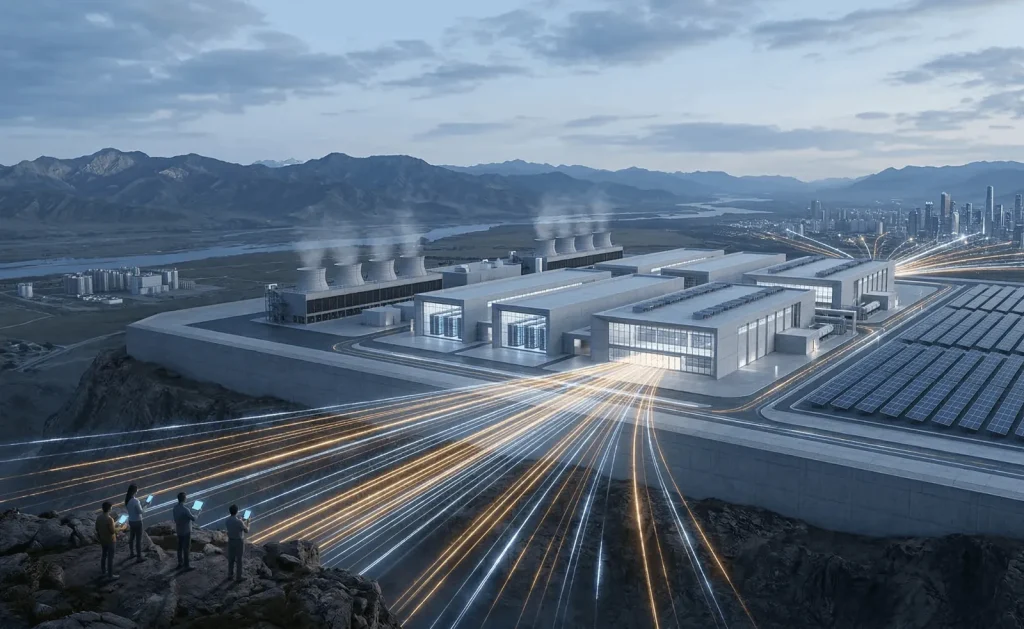
The GenAI sector can be divided into two broad layers. The first is foundation model training: a capital-intensive, energy-intensive, and geopolitically concentrated field. It requires massive data centers, advanced chips, and extremely high investment. For that reason, continued concentration seems more likely than a broadening of competition. The second is the inference layer: APIs, enterprise applications, assistants, and agent systems. This is the layer most likely to take on the character of an infrastructure-like service. But the spread of the inference layer does not mean that the training layer is also opening up to competition. Access may expand, but control over production capacity may not.
The claim that “AI will get cheaper” should not be taken as self-evidently true either. Technical costs may fall, and open models may proliferate. But in a monopolistic market, those developments do not guarantee a lasting decline in prices. Today’s low access costs may instead be part of a temporary subsidy phase designed to accelerate adoption and create dependency. If the world remains dependent on a handful of chipmakers, a handful of cloud firms, and a handful of model providers, then prices will be shaped not in a competitive commodity market, but under conditions of strategic control.
Who controls productive capacity will be the main axis of the debate. Who captures value will also be determined by this monopolistic or oligopolistic structure. If the answer continues to point to the same small set of firms and countries, then what we are looking at is not a public utility like electricity, but a global essential service held under private ownership. What will determine the future of AI is not only the model of access, but how monopoly power and dependency deepen over time.
Comments are closed