

Humanoid robots are no longer confined to the display window of science fiction. They are becoming increasingly visible in factories, warehouses, logistics centers, and the service sector. Their spread is always presented with the same promise: machines will take over risky and exhausting tasks, people will move into more qualified roles, production will increase, and life will become easier. At first glance, that is hard to object to. Still, the effects of a technology cannot be understood only by looking at what it can do. The economic order in which it is deployed also shapes the outcome.
What sharpens the debate around robots today is not only the growth of their technical capacity, but also the purposes for which that capacity is being used. Companies speak to the public about workplace safety and harmony between humans and machines. In investor presentations, they emphasize cutting costs, increasing efficiency, and making operations more flexible. These two languages are not separate. One helps produce public acceptance; the other helps expand expectations of profit.
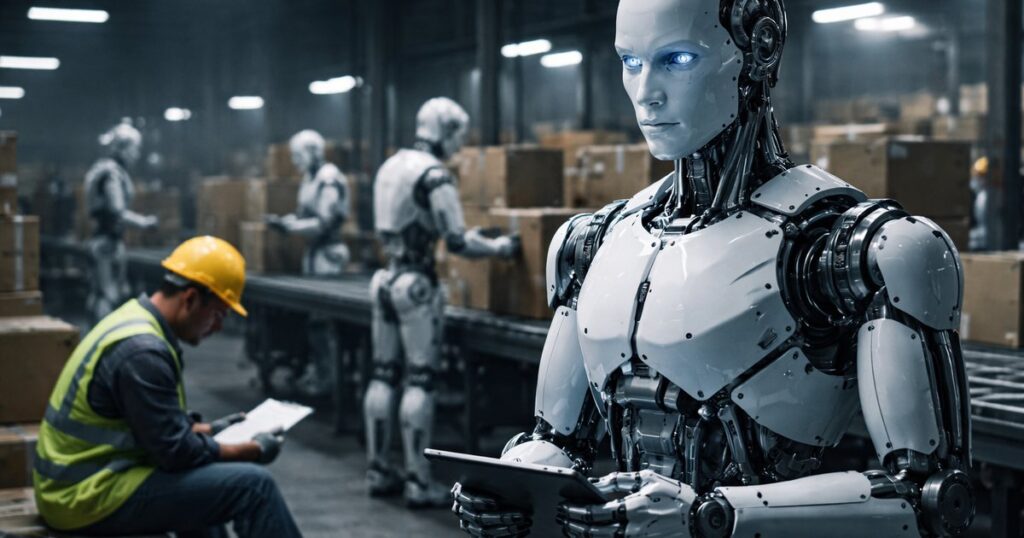
What one would expect from a technology that increases productivity is clear: safer workplaces, shorter working hours, and a broader distribution of the wealth it creates. Yet these outcomes are barely visible in the current picture. Productivity gains are not reflected in wages to the same degree. Workloads are not getting lighter; they are being reorganized through new performance metrics. In many places, automation is becoming less a tool for easing labor than a way to manage layoffs, flexible employment, and precarity more easily. Robots, too, are treated not as a means of expanding shared prosperity, but as an investment for improving balance sheets.
This shift does not affect only blue-collar labor. AI-driven automation is producing a similar breakdown in white-collar work. Millions of people who write, process data, prepare reports, or manage customer relations are increasingly seen as parts of standardized workflows. Experience, intuition, and accumulated knowledge are being converted from institutional value into cost calculations.
The real knot here is not how many people robots will replace, but who will control the value created by this process and how it will be distributed. If technological capacity is truly going to improve social life, that should show up in concrete ways: a shorter workweek, stronger unions, firmer income security, and productivity gains reflected in wages. Without these, what we are seeing is not just a new generation of machines, but a new way of managing labor that makes it more fragile.
Robots may not bring about the end of humanity. Even so, the hardening of working life, the erosion of human dignity, and the reorganization of society around the priorities of a narrow circle of capital are very real possibilities. The center of this debate should not be fear or admiration, but questions of ownership, control, and distribution.
Comments are closed